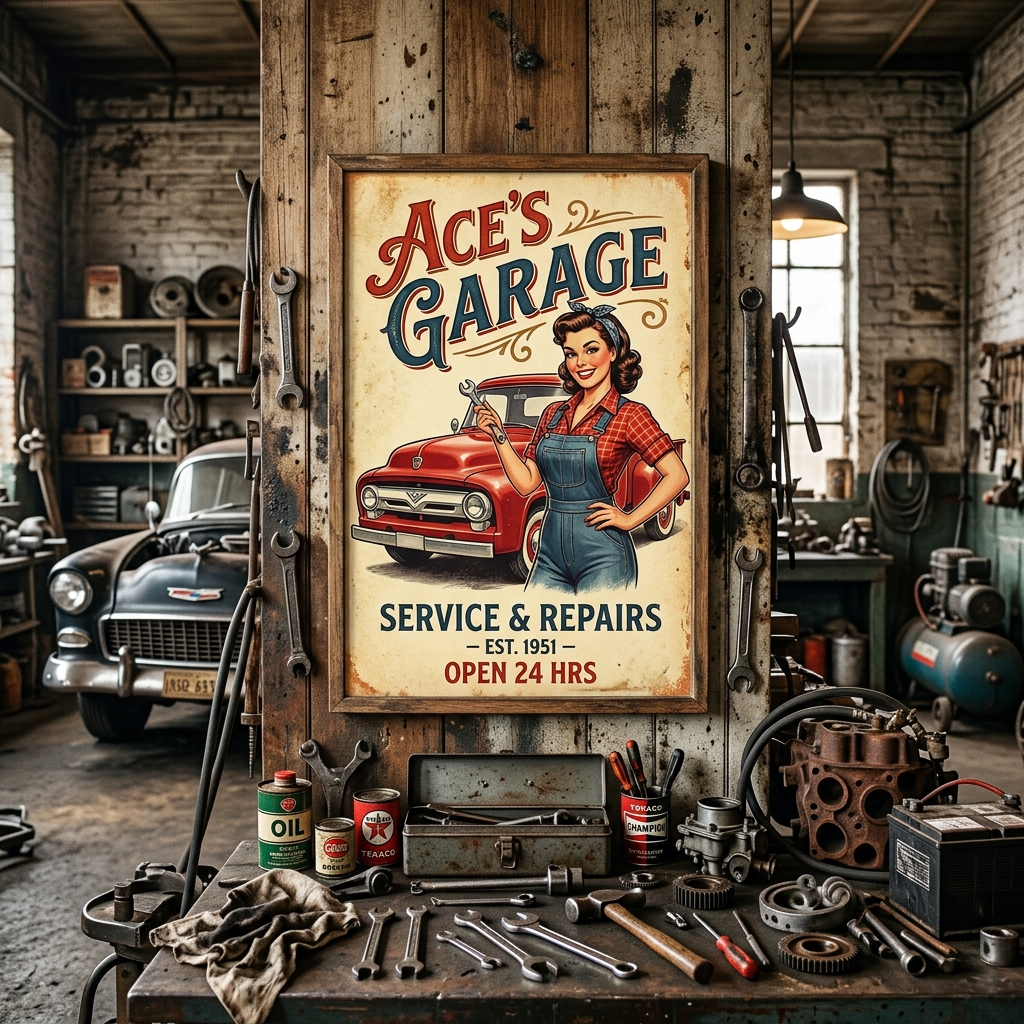
Step into any authentic vintage garage, and alongside the wrenches, oil cans, and exhaust fumes, you are almost guaranteed to see her: the Garage Pin-Up. But how did this iconic figure become so inextricably linked to American car culture, hot rods, and grease-stained hands?
From the Skies to the Streets
The origins of the modern garage pin-up trace back to the 1940s and World War II. Young pilots began painting beautiful, vibrant women on the fuselages of their bombers and fighter planes—a practice known as "Nose Art". These illustrations, often inspired by Vargas girls, served as lucky charms and a reminder of home.
When these young men returned home after the war, they brought this artistic tradition with them. Many of these veterans funneled their mechanical skills and adrenaline into a new hobby: building and racing Hot Rods in California.
The Golden Age of the 1950s
By the 1950s, the pin-up had transitioned from aircraft aluminum to the steel of American muscle and the walls of local gas stations. Tool companies like Snap-on and Mac Tools began distributing calendars featuring pin-up girls. These calendars were given to mechanics as a "thank you" for their loyalty, permanently cementing the pin-up as a staple of the workshop aesthetic.
The Aesthetic Impact
The juxtaposition is striking: the rough, dirty, and heavy machinery contrasted with the glamorous, colorful, and playful pin-up art. This contrast is the defining feature of the Vintage Garage Decor style.
Today, integrating a retro pin-up poster or a classic tin sign into your man cave or workshop isn't just about decoration; it's about paying homage to a distinct era of mechanical history and Americana. Embrace the bold colors, the polka dots, and the rockabilly spirit!